
Before Jon Skinner founded Glow Homes, his career had already taken a few unexpected turns.
His first taste of work came at just 13, helping on a milk round — early mornings, a milk float and the occasional loaf of bread alongside the bottles. It was a small beginning, but one he still credits with establishing a strong work ethic and a fairly ingrained “get on with it” attitude.
From there came a long involvement in music, including DJing, running a record shop and releasing around 70 records during the 1990s. Later, he built and scaled Picture Pal, a photography business that grew nationwide, before moving further into technology and launching Music Gateway, an online music platform that remains operational today.
Alongside the businesses are the things that matter away from work: family, a lifelong allegiance to Arsenal and, somewhere on the dream list, a 1965 AC Cobra 427 parked outside a home in the Surrey countryside.
But the idea for his latest business came from somewhere much closer to home.
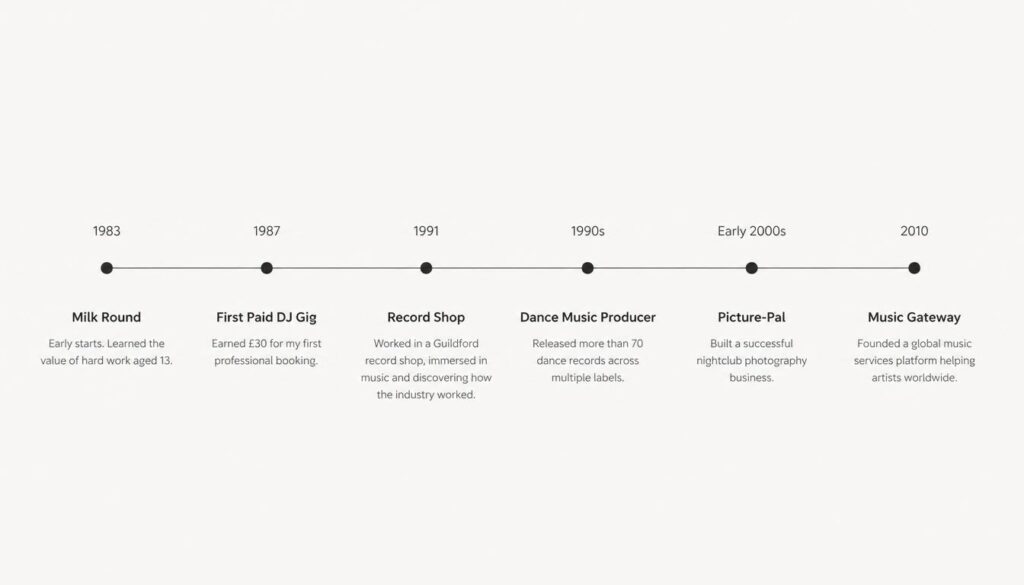
The problem started in Jon's own house
Like many homeowners, Jon’s energy requirements had gradually changed.
He was renovating and increasing the footprint of his property. Electricity use was growing. An electric vehicle entered the picture. All of that prompted what initially seemed like a fairly straightforward question:
What should he actually do about solar and home energy?
The deeper he looked, the less straightforward the answer became.
There were different schemes, competing recommendations, endless product choices and a great deal of price-led messaging. Too often, the conversation seemed to start with what could be installed or sold rather than with the property and the homeowner.
For somebody who had always been drawn to property, design and building businesses around better customer experiences, that felt like an opportunity.
What started as research for his own home became something of a rabbit hole.
And eventually, a much bigger question emerged:
If our homes are becoming increasingly electric, why aren’t we designing their energy systems in the same considered way we design the homes themselves?
That became the spark behind Glow Homes.
As Jon put it during his recent BNI feature presentation:
“Homes are becoming power stations. Nobody was designing them that way.”
From solar installation to home energy infrastructure
Glow Homes describes itself as a residential energy infrastructure company rather than simply a solar installer.
That distinction is deliberate.
A modern home energy system can bring together solar generation, battery storage, EV charging and provision for future technologies such as heat pumps. But simply assembling the individual pieces of hardware does not necessarily create a well-designed system.
What matters is how those parts work together around the property, the people living there and the way their energy requirements might change.
As Jon explained during his presentation:
“Most solar starts with panels. We think it should start with the home.”
That means understanding how energy is used today, what the property allows and what may change tomorrow before deciding what should actually be installed.
For anyone wanting to understand how the different parts of a modern home energy system interact, Glow explains this in more detail in How Home Energy Actually Works.
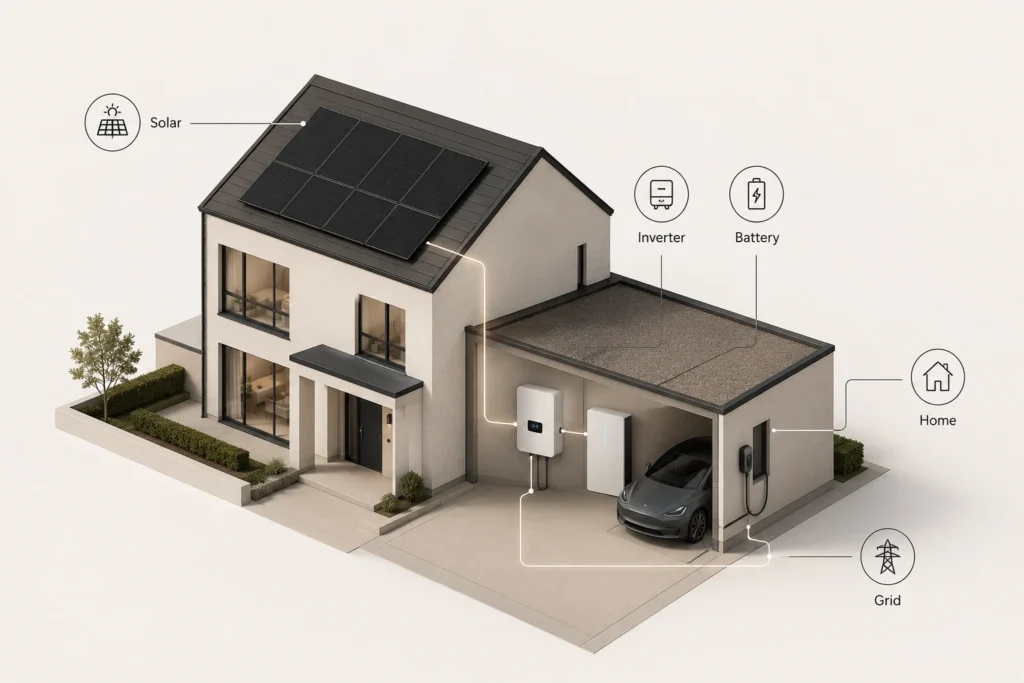
Designed for the home
There is no single “right” home energy system.
Two similar-looking houses can have completely different requirements.
One household may already have an electric vehicle. Another might expect to buy one in three years. Someone may work from home every day, while another property is largely empty until the evening. A homeowner planning an extension or a future heat pump has another set of requirements again.
Roof orientation, shading, available space and the electrical infrastructure of the property all influence the design too.
This is why Glow believes system design matters more than individual products.
The question should not simply be:
How many panels can we fit on the roof?
It should be:
What should the energy system for this particular home look like?
For homeowners beginning with that first question, Glow also has a useful guide explaining how many solar panels a home may actually need.
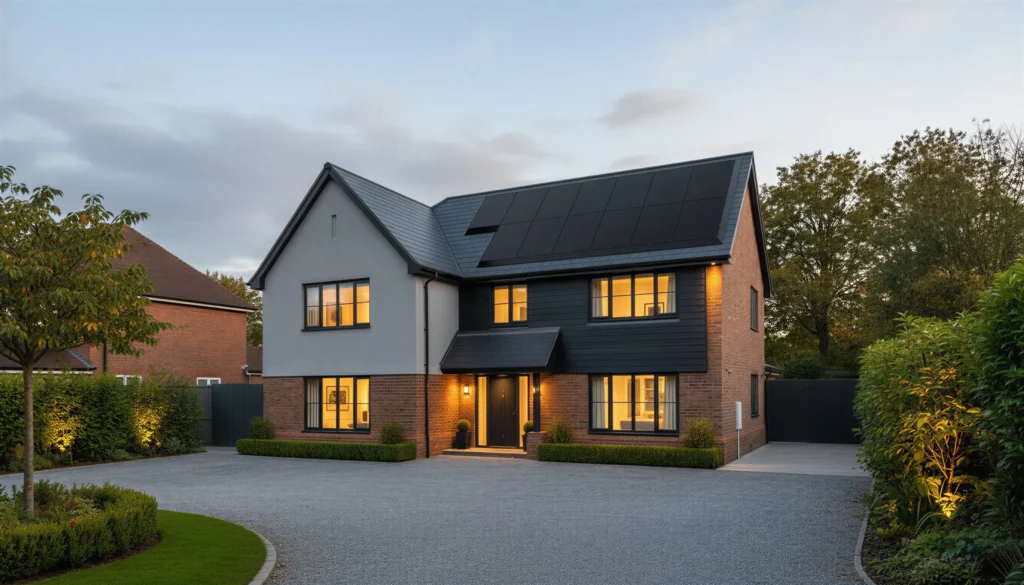
Tiny details make a big difference
One of the themes running through Jon’s presentation was that good system design often comes down to details that can easily be overlooked.
- Cable routes matter.
- The position of batteries and inverters matters.
- Roof layout matters.
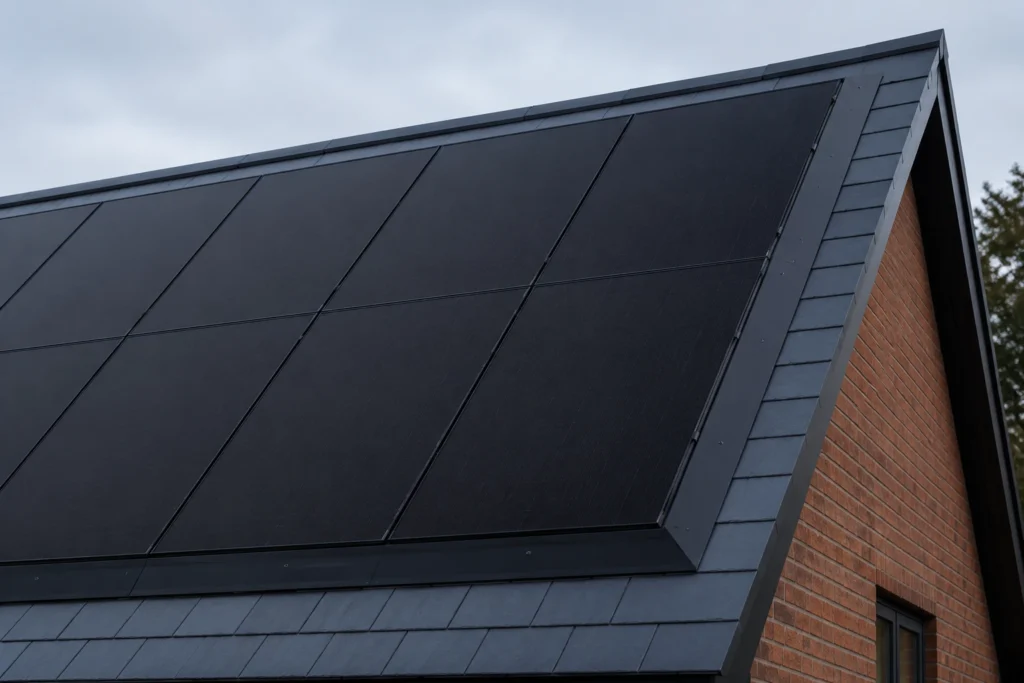
- How the completed installation looks on the property matters.
A technically sound system should also feel as though it belongs there.
The difference can be something as simple as whether equipment has been positioned where it is easiest to install, or whether somebody has thought about how the homeowner will actually live with it for the next twenty years.
For somebody investing significantly in a long-term home, those details matter alongside technical performance.
It is a mindset closer to thoughtful architecture or quality home improvement than simply fitting another piece of equipment.
Glow explores that philosophy further in Design, Safety & Standards.
Designed once. Built to last.
The homeowners Glow typically supports
Another useful part of Jon’s presentation was identifying the moments when homeowners naturally start thinking more seriously about energy.
It is often someone who is already making another significant decision about their property, such as:
- extending or renovating;
- buying a long-term or “forever” home;
- purchasing an electric vehicle;
- considering a heat pump;
- carrying out wider home improvements; or
- simply thinking more seriously about how their home should work in the future.
These moments matter because energy decisions are increasingly connected to other property decisions.
If a roof is being replaced, for example, it may make sense to think about solar at the same time. If electrical work is already taking place as part of an extension, future EV charging, battery storage or heating requirements can be considered before the project is complete.
Thinking earlier usually creates more options.
Homeowners can read more about Glow’s residential approach at Solar Panel Installation, while those based locally can explore Solar Panel Installation in Surrey.
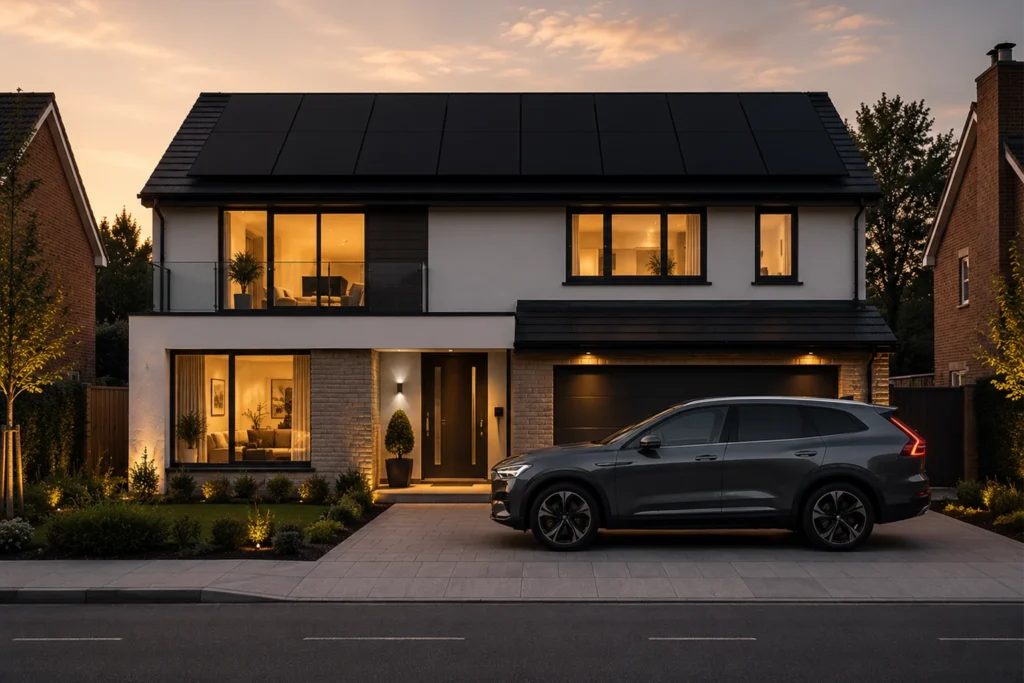
Why the people around the homeowner matter
That whole-home approach is also why Glow places real value on relationships with other professionals involved in property.
Architects, builders, structural engineers, interior designers, estate agents and mortgage advisers can all find themselves speaking to homeowners at precisely the point when larger decisions about a property are being made.
That can create an opportunity to think about energy much earlier in the process rather than treating it as an addition at the end.
And importantly, the person making the introduction does not need to understand solar panels, battery specifications or system architecture.
Sometimes the perfect introduction is simply:
“My client is doing a major renovation and wants to think properly about the long-term energy setup of the house.”
Glow can take the conversation from there.
For anyone interested in the people and partners behind the business, there is more at The Glow Team.
Installation should not be the end of the relationship
A home energy system is expected to operate for many years.
Glow therefore sees installation as the beginning of ownership rather than the end of a transaction.
As more of the home becomes electric, having clear accountability becomes increasingly important. Solar generation, battery storage, EV charging and potentially heating are no longer completely separate decisions.
They become part of the infrastructure of the property.
Glow was built around the idea that this infrastructure should be designed properly, installed carefully and supported beyond the day the system goes live.
That thinking sits at the heart of Infrastructure, Not Installations and the wider explanation of How Glow Works.
From individual homes to stronger communities
The final part of Jon’s presentation widened the conversation beyond individual properties.
Glow Homes is based in Reigate, which has become the founding location for the Glow Network model.
Glow Networks coordinate how individually designed home energy systems are delivered within a local area.
Each property still receives its own system, designed specifically around that home. The network allows elements such as planning, scheduling and installation to be coordinated locally rather than treating every project as an isolated installation.
But the idea goes further than operational efficiency.
Glow also wants some of the value created within an area to remain connected to that community.
In Reigate, that has meant bringing together homeowners, local businesses, charities and community organisations as part of a wider initiative built around local participation and community impact.
As Jon summarised during his presentation:
“Glow Homes isn’t really about solar. It isn’t really about batteries. It’s about leaving every community slightly better than we found it.”
It is a bigger ambition than simply putting panels on roofs.
Looking beyond the panels
The technology inside our homes will continue to change.
Solar panels will improve. Batteries will evolve. Electric vehicles and heat pumps will place different demands on domestic electricity systems. New technologies will emerge that most homeowners are not even thinking about today.
Nobody can predict every piece of equipment that a home might use over the next twenty years.
But a home can be designed with that change in mind.
That, ultimately, is the thinking behind Glow Homes.
Rather than beginning with hardware, begin with the property, the people living there and where that home may be heading.
Then design the system around them.
Because if homes really are becoming small power stations, perhaps it is time we started designing them that way.
Designed once. Built to last.
To learn more about Glow Homes and its approach to residential energy, visit Glow Homes.